• Home
  • About Vista Farm
  • Plants
  • Birds
  • Insects
  • Fish, Mammals and More at Vista Farm
  • Native Plants of Louisiana
  • Contact
Don't Kill My WeedsDon't Kill My Weeds
  • Home
  • About Vista Farm
  • Plants
  • Birds
  • Insects
  • Fish, Mammals and More at Vista Farm
  • Native Plants of Louisiana
  • Contact

A List of Birds Observed at Vista Farm since 2005

Home AnimalsA List of Birds Observed at Vista Farm since 2005
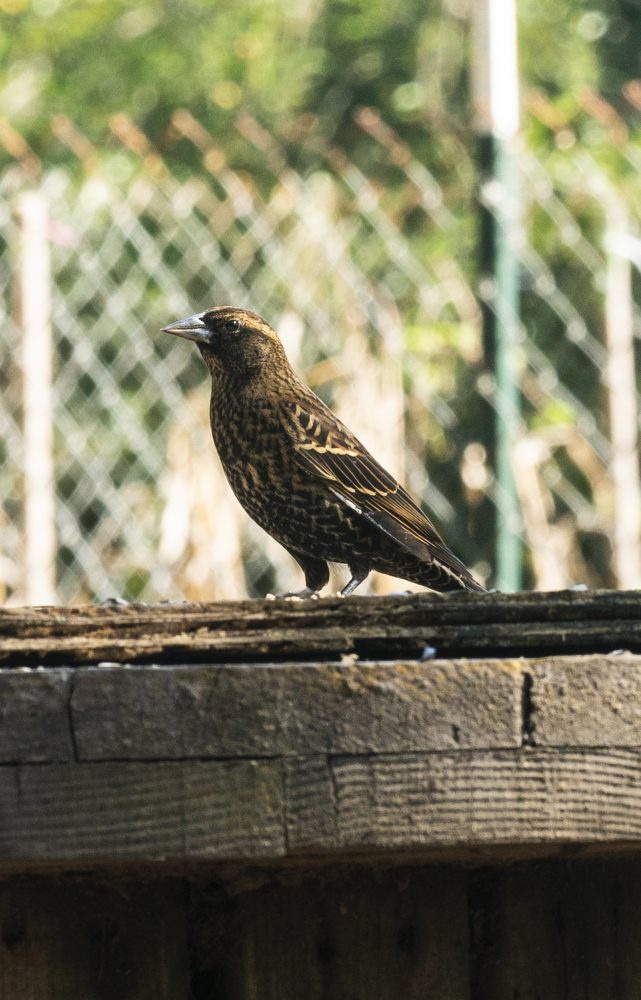
Brown-headed Cowbird
Brown-headed Cowbird, Molothrus ater

A List of Birds Observed at Vista Farm since 2005

February 21, 2020 Posted by Judy Darby Animals, Biodiversity, Birds, Ecology, Muscovy, Native Lousiana Species, Wildlife

We’ve been watching birds at Vista Farm since Day One in 2005. Finally, here’s a list of those observed with a link to many of their photos in the Gallery. We submit our observations to eBird.org and iNaturalist.org.

This list of birds observed at Vista Farm is updated. Check back often for new finds.

American Kestrel
Anhinga
Bald Eagle
Duck, Black-bellied Whistling
Duck, Muscovy
Duck, Redhead
Duck, Ring-necked
Duck, Wood
Blackbird, Red-winged
Blue Grosbeak
Blue Jay
Bluebird, Eastern
Bobwhite, Northern
Brown Thrasher
Canada Goose
Cardinal
Catbird, Gray
Chickadee, Carolina
Cormorant, Double-crested
Cowbird, Brown-headed
Crow
Dove, Inca
Eastern Kingbird
Egret, Great
Egret, Snowy
Finch, American Gold
Finch, Purple
Flycatcher, Great Crested
Frigatebird (on the wing)
Gnatcatcher, Blue-gray
Grackle, Common
Great Horned Owl
Grebe, Pied-Billed
Hawk, Red-shouldered
Hawk, Red-tailed
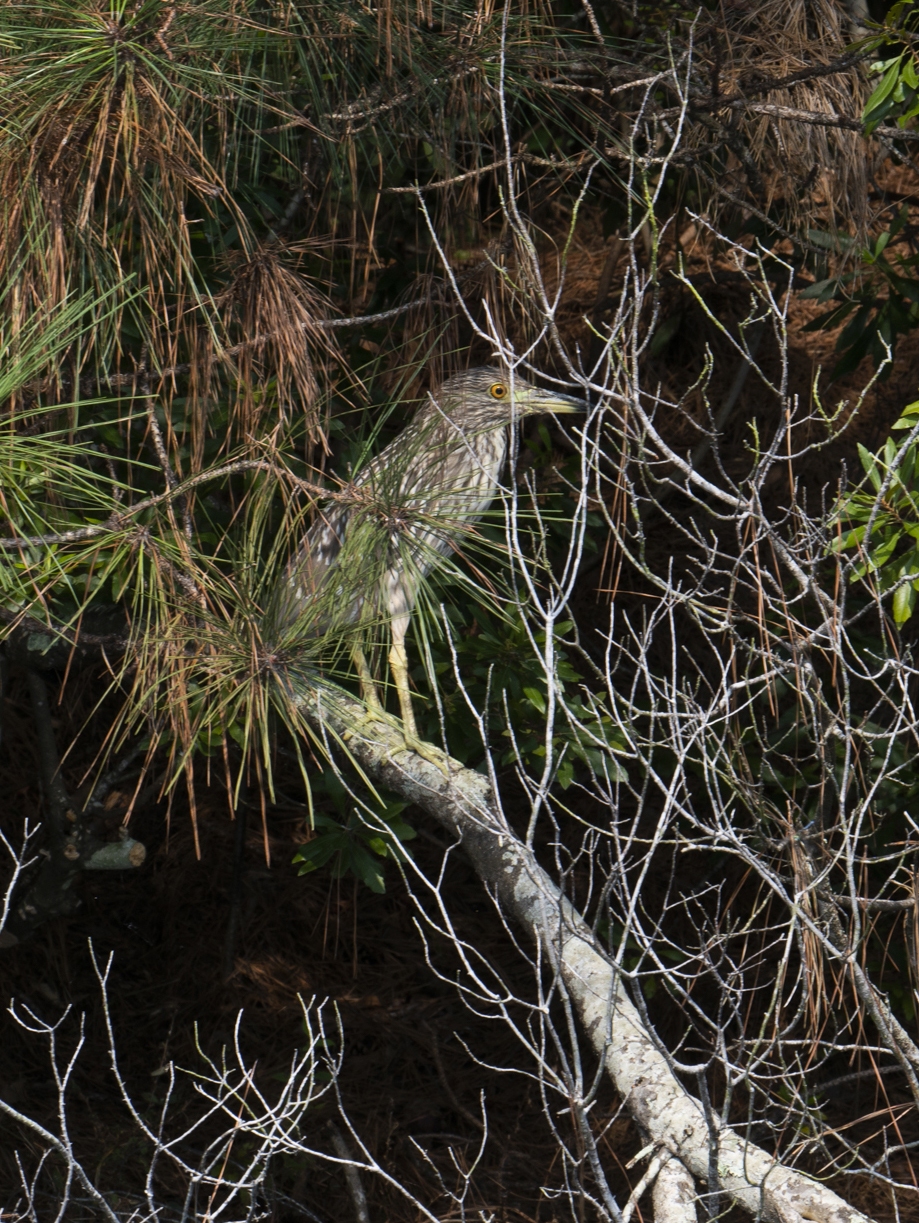
Heron, Black-crowned Night
Heron, Great Blue
Heron, Green
Heron, Little Blue
Ibis, White
Killdeer
Kingfisher, Belted
Kite, Mississippi (on the wing)
Kite, Swallow-tailed (on the wing)
Limpkin
Loggerhead Shrike
Loon, Common
Merlin
Northern Flicker
Nuthatch, White-breasted
Oriole, Orchard
Osprey
Pelican, Brown
Phoebe, Eastern
Robin
Roseate Spoonbill
Greater Scaup
Sparrow, Song
Sparrow, Swamp
Starling
Tanager, Summer
Towhee, Eastern
Tufted Titmouse
Turkey, Wild
Vulture, Black
Vulture, Turkey
Warbler, Pine
Warbler, Yellow
Warbler, Yellow-rumped (Myrtle)
Wood Duck
Woodpecker, Downy
Woodpecker, Hairy
Woodpecker, Pileated
Woodpecker, Red-headed
Woodpecker, Red-bellied
Wren, Carolina
Wren, House
Wren, Sedge
Yellowthroat, Common
Tags: birdscoastal plainecologyecosystemflatwoodforesthabitatinventoryLouisianaMadisonvillemeadownativeobservationornithologypondsmallspeciesVista Farmwetlandwildlife
0
Share

About Judy Darby

Judy Darby is a photographer and freelance writer in Madisonville, Louisiana. Originally from Ruston, Louisiana, she lived in Weston, Connecticut for more than 20 years before moving to south Louisiana where she met her long-time significant other, Noel Brumfield, a U.S. Coast Guard licensed 100-ton captain. Judy exchanged a 15-acre tract on Interstate 20 in Ruston for Vista Farm in 2005 and is turning it into a protected habitat for small wildlife and native plants.

You also might be interested in

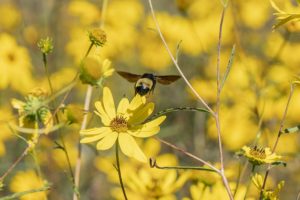
Meadow American Bumble Bee
Meadow American Bumble Bee, Bombus pensylvanicus, busily pollinating the sunflowers at Vista Farm. is a threatened species of bumblebee native to North America. Its tends to live and nest in open farmland and fields feeding on several food plants, but favoring sunflowers and clovers. While bees normally forage close to their nests, individuals can return from up to 1.5 miles away. Bombus pensylvanicus generally nests in fields of long grass, but may sometimes nest underground. The species utilizes bundles of hay or long grass to create sheltered nests above ground. Some nest in established crevices and burrows, such as old bird nests, rodent burrows, or in cinder blocks. They have even been noted to nest in human made objects, like buckets or barns. Assassin bugs and dragonflies are common predators of the bee. Queens are considered the dominant caste because they are usually the largest bees of the colony. As worker male bees grow larger in average wing length, they become the dominant caste as the number of queens decrease. Wing length of males vary depending upon the point of colony development. Males that founded the colony tend to have a smaller wing length than the first or second generation of the colony. Food supply is scarce, at first, as the queen is the forager. Until July, the workers are the foraging caste and an enormous increase in body size is observed. The worker proportions decrease when reproductive males develop, representing a turning point in the colony, as male size increase until active bees develop to the size of a queen near November and December when the worker population dissipates. Queens maintain the least amount of standard deviation for average wing length and thus are the most stable caste in the colony. It is postulated that this is because queens are made in a short time span when colony resources have reached its threshold. Source Wikipedia

Building An All-Native Wildflower Habitat

Oct 14, 2023

Building a new pollinator habitat of all native wildflowers with funding from the NRCS Conservation Stewardship Program.

The Meadow at Sunrise
The meadow at sunrise

Links To All Posts

Oct 29, 2023

We've posted quite a bit since 2019 and not all the titles appear on the About page. Here they are. Enjoy!

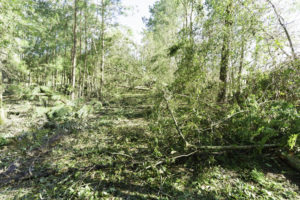
Hurricane Ida Damage

Hurricane Ida

Sep 25, 2021

Hurricane Ida swept through Madisonville, LA, on August 29, 2021, causing downed trees and much debris at Vista Farm.

Recent Posts

  • 2026 Vista Farm Journal
  • Fish Pond Management
  • Duck Gumbo with Andouille Sausage
  • 2025 Journal
  • Counting Caterpillars

Recent Comments

    Archives

    • January 2026
    • December 2025
    • November 2025
    • January 2025
    • October 2024
    • June 2024
    • April 2024
    • January 2024
    • October 2023
    • August 2023
    • January 2023
    • April 2022
    • January 2022
    • September 2021
    • May 2021
    • April 2021
    • March 2021
    • January 2021
    • December 2020
    • November 2020
    • June 2020
    • February 2020
    • October 2019
    • September 2019
    • August 2019

    Categories

    • Advice
    • Animals
    • Biodiversity
    • Bird Migration
    • Birds
    • Butterflies
    • Carbon
    • Climate
    • composting
    • Ecology
    • Ecosystem
    • Environment
    • Fish
    • Fish Pond Management
    • Fishing pier
    • Floating boat dock
    • Gardening
    • Grasses
    • Habitat
    • Health
    • Insects
    • Journal
    • Muscovy
    • Muscovy Duck
    • Native Lousiana Species
    • Native Wildflowers
    • NRCS
    • Nutrition
    • Plants
    • Pollinators
    • Recipes
    • Recycle
    • Travel and Tourism
    • Trees
    • Uncategorized
    • Video
    • Weather
    • Wildflowers
    • Wildlife

    Most Commented Posts

    • The Ecosystems at Vista Farm, a Small-Wildlife Habitat By Judy Darby on August 8, 2019 0
    • Dirt and Germs! By Judy Darby on August 12, 2019 0
    • Vista Farm, A 30-acre Protected Flatwood By Judy Darby on August 13, 2019 0

    Recent Comments

    Most Liked Posts

    • Loblolly or Slash–Which Pine Is It? By Judy Darby on September 7, 2019 13
    • Native Louisiana Plants at Vista Farm By Judy Darby on June 8, 2020 2
    • How To Set up A Wood Duck Nest Box By Judy Darby on March 8, 2021 2

    Tag Cloud

    advice animal animals biodiversity bird birds Cocoon common name conservation duck ducklings ecology ecosystem environment flatwood forest gardening habitat hen how-to how to identification Louisiana Madisonville meadow Muscovy native native plants native species natural resources nest NRCS plants pond recycle small wildlife species tree Vista Farm Weather wetland wild wildflower wildflowers wildlife

    Contact Me

    I'll get back to you right away.

    Send Message

    A Monarch Butterfly laying an egg

    https://dontkillmyweeds.com/wp-content/uploads/2021/04/MAH05099.mp4

    Contact Info

    • Judy Darby
    • Darby Holdings, LLC
    • 810 Main St., Madisonville, LA 70447
    • judy@dontkillmyweeds.com
    • dontkillmyweeds.com

    Flickr Photostream

    © 2026 — Judy Darby

    • Home
    • About Vista Farm
    • Plants
    • Birds
    • Insects
    • Fish, Mammals and More at Vista Farm
    • Native Plants of Louisiana
    • Contact
    Prev Next